Exploring the nuances of selecting the optimal roofing material for various climates, this introduction sets the stage for a thorough examination of factors that influence this crucial decision. From extreme temperatures to heavy precipitation, each climate presents unique challenges that call for specific roofing solutions.
As we delve deeper into the world of roofing materials, we uncover the secrets to ensuring durability, performance, and longevity in any climate condition.
Factors to Consider
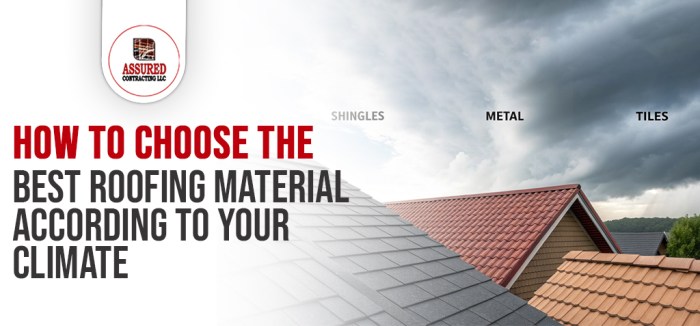
When choosing roofing materials, it is crucial to consider the climate of the area where the building is located. The climate has a significant impact on the durability and performance of different roofing materials. Factors like temperature, humidity, precipitation, and wind can affect how well a roof withstands the elements.
Impact of Climate on Roofing Materials
- Temperature: Extreme temperatures can cause expansion and contraction of roofing materials, leading to cracks and leaks.
- Humidity: High humidity levels can promote the growth of mold and mildew on certain roofing materials.
- Precipitation: Areas with heavy precipitation may require roofing materials that are highly resistant to water penetration.
- Wind: Strong winds can lift or damage roofing materials that are not securely installed or designed to withstand gusts.
Roofing Materials for Hot Climates
In hot climates, choosing the right roofing material is crucial to ensure the comfort and energy efficiency of your home. Different materials have varying abilities to withstand high temperatures and UV exposure.When it comes to roofing materials for hot climates, several options stand out for their durability and heat-resistance.
Let's explore some of the best choices and how they perform in hot weather.
Clay Tiles
Clay tiles are a popular choice for hot climates due to their ability to withstand high temperatures and UV rays. They are known for their durability and longevity, making them a great option for areas with intense sunlight exposure. The natural thermal resistance of clay helps keep the interior of the building cooler, reducing the need for excessive air conditioning.
Metal Roofs
Metal roofs are another excellent choice for hot climates. They are highly reflective and can effectively reduce heat absorption, keeping the building cooler. Metal roofs are also known for their longevity and low maintenance requirements, making them a cost-effective option in the long run.
Asphalt Shingles
While asphalt shingles are not the most heat-resistant option, they can still perform well in hot climates when properly installed and maintained. Choosing light-colored asphalt shingles can help reflect sunlight and reduce heat absorption, improving energy efficiency.
Reflective or Light-Colored Roofing Materials
Opting for reflective or light-colored roofing materials can significantly impact the temperature inside your home. These materials have the ability to reflect sunlight and heat away from the building, reducing the need for excessive cooling and lowering energy costs. Additionally, they can prolong the lifespan of the roof by minimizing heat-related damage.In hot climates, selecting the right roofing material can make a significant difference in the comfort and energy efficiency of your home.
Consider the durability, heat-resistance, and reflective properties of the materials to make an informed decision that suits your climate and budget.
Roofing Materials for Cold Climates
When it comes to choosing roofing materials for cold climates, durability and insulation are key factors to consider. The materials need to withstand extreme cold temperatures, heavy snow loads, and potential ice dams. Let's explore some of the best options for roofing in cold climates.
Slate Roofing
Slate is a popular choice for cold climate roofing due to its durability and longevity. It is a natural stone material that can withstand freezing temperatures without cracking or deteriorating. Slate roofs are also known for their elegant appearance and fire resistance.
Concrete Tiles
Concrete tiles are another excellent option for cold climates. They are durable, fire-resistant, and can handle heavy snow loads. Concrete tiles are also available in various styles and colors, allowing for customization to suit different architectural designs.
Wood Shakes
Wood shakes provide a classic and rustic look to homes in cold climates. While they may require more maintenance compared to other materials, wood shakes can perform well in cold weather when properly treated and installed. It is essential to ensure adequate ventilation and insulation to prevent issues like rot and mold.
Importance of Insulation and Snow Load Capacity
Insulation is crucial for cold climate roofing to prevent heat loss and reduce the risk of ice dams forming on the roof
Roofing Materials for Wet Climates
In wet climates, it is crucial to choose roofing materials that can withstand constant exposure to moisture and prevent issues like leaks and mold growth.
Rubber Slate
Rubber slate is a popular choice for wet climates due to its durability and resistance to water damage. It is lightweight, easy to install, and offers excellent protection against heavy rainfall.
Standing Seam Metal Roofs
Standing seam metal roofs are another excellent option for wet climates. They have a sleek, modern look and provide superior water resistance. The raised seams help prevent water from seeping into the roof, making them ideal for areas with high precipitation.
Concrete Tiles
Concrete tiles are known for their durability and ability to withstand harsh weather conditions, including heavy rainfall. They are resistant to water damage and can effectively protect a home from the elements in wet climates.
Water resistance is a key factor to consider when choosing roofing materials for wet climates. It ensures that the roof can effectively repel water and prevent leaks, which can lead to costly damage to the structure of the building.
Algae resistance is also important in wet climates, as moisture-rich environments can promote the growth of algae and mold on the roof. Choosing materials that are resistant to algae can help maintain the appearance and longevity of the roof in these conditions.
Roofing Materials for Windy Climates
When it comes to choosing roofing materials for windy climates, it is essential to consider the durability and wind resistance of the material. High winds can put a lot of stress on a roof, so selecting the right material is crucial to ensure the longevity and safety of your home.
Let's take a look at some of the best roofing materials for windy climates.
Metal Roofs
Metal roofs are known for their durability and excellent wind resistance, making them a popular choice for windy climates. They are lightweight yet strong, which helps them withstand high winds without sustaining damage. Metal roofs are also fire-resistant and can last for decades with proper maintenance.
Asphalt Shingles
Asphalt shingles are another common choice for roofing in windy climates. While they may not be as wind-resistant as metal roofs, they can still perform well if installed correctly. It is important to use quality asphalt shingles with a high wind resistance rating and ensure they are properly secured to the roof deck to prevent them from lifting during strong winds.
Composite Shingles
Composite shingles, made from a mixture of materials like asphalt, fiberglass, and recycled materials, are also a good option for windy climates. They offer a balance of affordability, durability, and wind resistance. Composite shingles can mimic the look of other materials like wood or slate while providing better resistance to wind uplift.
Proper installation techniques are crucial when it comes to roofing materials for windy climates. Ensuring that the roofing material is securely fastened to the roof deck and using the right underlayment can help prevent wind damage and prolong the lifespan of the roof.
Summary
In conclusion, the journey of selecting the perfect roofing material for your climate is a blend of science, art, and practicality. By understanding the impact of weather patterns on different materials, you can make an informed choice that protects your home and enhances its aesthetic appeal.
Helpful Answers
How do I determine the best roofing material for a hot climate?
For hot climates, consider materials like clay tiles, metal roofs, or asphalt shingles that offer heat resistance and durability.
Are light-colored roofing materials really beneficial in hot climates?
Yes, light-colored or reflective roofing materials help in reducing heat absorption, keeping your home cooler in hot climates.
What roofing materials are most suitable for cold climates?
Opt for materials like slate, concrete tiles, or wood shakes that have good insulation properties and can withstand harsh cold weather conditions.
How important is water resistance in roofing materials for wet climates?
Water resistance is critical in wet climates to prevent leaks and water damage. Materials like rubber slate and standing seam metal roofs are excellent choices.
What factors should I consider for choosing roofing materials in windy climates?
Focus on wind uplift resistance and proper installation techniques when selecting roofing materials for windy areas. Metal roofs and asphalt shingles are often recommended.